
Our Work
.
Policies to Support Migrant Women Experiencing Gender-Based Violence: Gaps and Opportunities
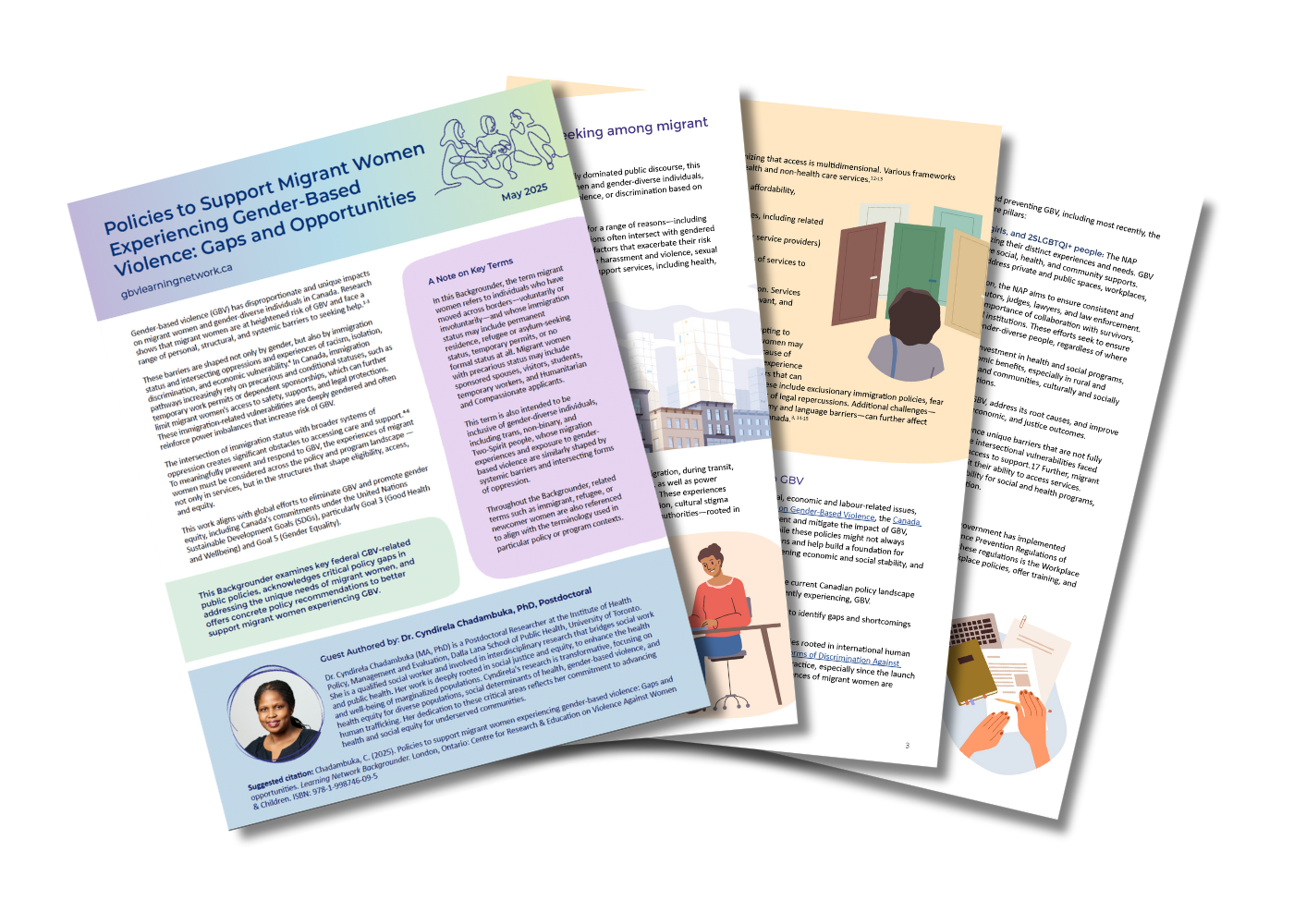
This Backgrounder examines key federal GBV-related public policies, acknowledges critical policy gaps in addressing the unique needs of migrant women, and offers concrete policy recommendations to better support migrant women experiencing GBV.
May 2025
Click here to access the PDF
Policies to Support Migrant Women Experiencing Gender-based Violence: Gaps and Opportunities
Gender-based violence (GBV) has disproportionate and unique impacts on migrant women and gender-diverse individuals in Canada. Research shows that migrant women are at heightened risk of GBV and face a range of personal, structural, and systemic barriers to seeking help.1-3
These barriers are shaped not only by gender, but also by immigration status and intersecting oppressions and experiences of racism, isolation, discrimination, and economic vulnerability.4 In Canada, immigration pathways increasingly rely on precarious and conditional statuses, such as temporary work permits or dependent sponsorships, which can further limit migrant women’s access to safety, supports, and legal protections. These immigration-related vulnerabilities are deeply gendered and often reinforce power imbalances that increase risk of GBV.
The intersection of immigration status with broader systems of oppression creates significant obstacles to accessing care and support.4-6 To meaningfully prevent and respond to GBV, the experiences of migrant women must be considered across the policy and program landscape — not only in services, but in the structures that shape eligibility, access, and equity.
This work aligns with global efforts to eliminate GBV and promote gender equity, including Canada’s commitments under the United Nations Sustainable Development Goals (SDGs), particularly Goal 3 (Good Health and Wellbeing) and Goal 5 (Gender Equality).
This Brief examines key federal GBV-related public policies, acknowledges critical policy gaps in addressing the unique needs of migrant women, and offers concrete policy recommendations to better support migrant women experiencing GBV.
A Note on Key Terms
In this Backgrounder, the term migrant women refers to individuals who have moved across borders—voluntarily or involuntarily—and whose immigration status may include permanent residence, refugee or asylum-seeking status, temporary permits, or no formal status at all. Migrant women with precarious status may include sponsored spouses, visitors, students, temporary workers, and Humanitarian and Compassionate applicants.
This term is also intended to be inclusive of gender-diverse individuals, including trans, non-binary, and Two-Spirit people, whose migration experiences and exposure to genderbased violence are similarly shaped by systemic barriers and intersecting forms of oppression.
Throughout the Backgrounder, related terms such as immigrant, refugee, or newcomer women are also referenced to align with the terminology used in particular policy or program contexts.
Guest Authored by: Dr. Cyndirela Chadambuka, PhD, Postdoctoral
Dr. Cyndirela Chadambuka (MA, PhD) is a Postdoctoral Researcher at the Institute of Health Policy, Management and Evaluation, Dalla Lana School of Public Health, University of Toronto. She is a qualified social worker and involved in interdisciplinary research that bridges social work and public health. Her work is deeply rooted in social justice and equity, to enhance the health and well-being of marginalized populations. Cyndirela's research is transformative, focusing on health equity for diverse populations, social determinants of health, gender-based violence, and human trafficking. Her dedication to these critical areas reflects her commitment to advancing health and social equity for underserved communities.
Suggested citation: Chadambuka, C. (2025). Policies to support migrant women experiencing gender-based violence: Gaps and opportunities. Learning Network Backgrounder. London, Ontario: Centre for Research & Education on Violence Against Women & Children. ISBN: 978-1-998746-09-5
Understanding GBV experiences and help-seeking among migrant women in Canada
Migration is a gendered phenomenon.7 While male labour migration has historically dominated public discourse, this focus has often obscured the unique and multifaceted experiences of migrant women and gender-diverse individuals, including transgender women, who may flee their countries due to persecution, violence, or discrimination based on their gender or sexuality.8
The experiences of migrant women deserve particular attention, as women migrate for a range of reasons—including employment, caregiving responsibilities, or as accompanying spouses. These motivations often intersect with gendered systems of oppression, marginalization, and discrimination, as well as socioeconomic factors that exacerbate their risk to exploitation, discrimination, and violence (e.g. intimate partner violence, workplace harassment and violence, sexual assault).9 These same factors can also create significant barriers to accessing various support services, including health, social, and legal services.10
Migrant women may face different forms of GBV at every stage of the migration process: pre-migration, during transit, and post-migration. Each phase presents distinct risks, including economic and social challenges, as well as power imbalances in relationships and workplaces that increase vulnerability to exploitation and abuse. These experiences are further shaped by intersecting factors such as precarious immigration status, fear of deportation, cultural stigma and stereotypes, socioeconomic marginalization, and legal or systemic barriers. A lack of trust in authorities—rooted in experiences of systemic racism and discrimination—can further limit access to protection and support.
Migrant women face challenges during the resettlement process that increase their risk of both face-to-face victimization and technology facilitated gender-based violence (TFGBV).11 As they navigate their new environments in the resettlement stage, many migrant women seek to maintain social and familial ties and find new opportunities by engaging with online communities and social media platforms. However, these same online platforms can also become spaces where they are targeted for harassment, exploitation, and abuse. These forms of TFGBV, compounded by overlapping experiences of offline and online victimization, can lead to complex trauma and chronic stress, further hindering migrant women's ability to seek help and access the support they need.
Barriers to help-seeking
Understanding barriers to accessing services requires recognizing that access is multidimensional. Various frameworks have been developed to better understand access to both health and non-health care services.12-13
These frameworks commonly highlight three key dimensions: affordability, availability, and acceptability:
- Affordability refers to the direct and indirect costs of services, including related expenses like transportation or time off work.
- Availability reflects whether services (physical spaces and/or service providers) are physically reachable and available in a timely way.
- Acceptability refers to the cultural and social appropriateness of services to meet the diverse needs of individuals seeking care.
These dimensions are interconnected and cannot operate in isolation. Services must not only exist, but also be financially accessible, culturally relevant, and tailored to the communities they aim to serve.
For women who experience GBV, numerous barriers exist when attempting to leave abusive relationships and seek formal care and supports. Many women may be hesitant to seek care and support from various service providers because of different cultural and socio-economic factors. For migrant women who experience GBV, these barriers are often compounded by immigration-related factors that can significantly limit their ability to leave abusive situations or seek help. These include exclusionary immigration policies, fear of deportation, limited awareness of available services, isolation, and fear of legal repercussions. Additional challenges—such as racism, cultural stigma, and challenges related to financial autonomy and language barriers—can further affect their access to and navigation of new health, legal, and social systems in Canada.3, 14-15
Overview of current federal public policies related to GBV
Canada has implemented a range of federal policies that address broader social, economic and labour-related issues, which either directly or indirectly impact GBV such as the National Action Plan on Gender-Based Violence, the Canada Labour Code, and the National Housing Strategy Act. These policies aim to prevent and mitigate the impact of GBV, improve access to support for survivors, and provide workplace protections. While these policies might not always appear directly focused on GBV in everyday work, they offer important protections and help build a foundation for broader systemic support. This includes advancing survivor protections, strengthening economic and social stability, and improving access to housing, employment, and healthcare services.
However, despite these frameworks, there is a growing need to assess how well the current Canadian policy landscape addresses the specific needs of migrant women who have experienced, or are currently experiencing, GBV.
Given that nearly one in four people in Canada (23.0%) are immigrants,16 it is crucial to identify gaps and shortcomings that may heighten risk or prevent access to necessary supports and services.
For decades, Canadian anti-violence advocates have called for interventions and policies rooted in international human rights obligations, such as those outlined in the Convention on the Elimination of All Forms of Discrimination Against Women (CEDAW). While steady progress has been made across research, policy, and practice, especially since the launch of the SDGs in 2015, what remains unclear is the extent to which the needs and experiences of migrant women are meaningfully reflected in Canada’s GBV-related policies.
Below is an overview of selected federal policies that directly or indirectly address GBV:
1. National Action Plan to End GBV (NAP-GBV)
The federal government has implemented policies aimed at addressing and preventing GBV, including most recently, the National Action Plan to End GBV (NAP), which is structured around five core pillars:
- Support for victims, survivors and families, including women, girls, and 2SLGBTQI+ people:The NAP emphasizes the health and well-being of victims and survivors, recognizing their distinct experiences and needs. GBV support services aim to ensure access to safe spaces and comprehensive social, health, and community supports.
- Prevention: The NAP prioritizes preventing GBV, with strategies that address private and public spaces, workplaces, educational settings, and online environments.
- Responsive justice system: Recognizing GBV as a human rights violation, the NAP aims to ensure consistent and fair application of laws by all actors in the justice system, including prosecutors, judges, lawyers, and law enforcement.
- Implementing Indigenous-led approaches: The NAP highlights the importance of collaboration with survivors, their families, Indigenous organizations, provinces, territories, and federal institutions. These efforts seek to ensure sustained progress in ending GBV against Indigenous women, girls, and gender-diverse people, regardless of where they live.
- Social infrastructure and enabling environment: This pillar includes investment in health and social programs, such as GBV services. It aims to deliver comprehensive care and socioeconomic benefits, especially in rural and remote areas, through strategies such as care support for children, seniors, and communities, culturally and socially relevant trauma- and violence-informed services, and a range of housing options.
The overall goal of the NAP-GBV is to shift social norms and attitudes related to GBV, address its root causes, and improve access to culturally appropriate, accessible services that promote health, social, economic, and justice outcomes.
While the NAP-GBV is a comprehensive framework, migrant women often experience unique barriers that are not fully addressed by the policy. For instance, the lack of culturally specific support and the intersectional vulnerabilities faced by migrant women—such as fear of deportation and language barriers—can limit access to support.17 Further, migrant women with precarious immigration status may face additional challenges that limit their ability to access services. These can include fear of deportation, limited or no insurance coverage, and ineligibility for social and health programs, particularly for those without permanent residency, citizenship, or legal documentation.
2. Workplace Harassment and Violence
Recognizing that GBV transcends personal, social, and economic spaces, the federal government has implemented measures through the Canada Labour Code and the Workplace Harassment and Violence Prevention Regulations of 2020 to help protect GBV survivors from violence in the workplace. Enshrined within these regulations is the Workplace Harassment and Violence Prevention Policy, which requires employers to develop workplace policies, offer training, and establish clear resolution processes for addressing harassment and violence.
Additionally, under the Canada Labour Code, employees who are victims of family violence, a form of GBV, or parents of a victim are entitled to up to 10 days of leave per year to access health care, psychosocial support, legal services, or safe housing, if needed.
While these protections are important, migrant women in precarious employment (such as those on temporary visas, in part-time, or low-wage work) are often not explicitly considered. Migrant women may be hesitant to use these provisions due to the fear of losing their jobs, especially if their work permits are tied to their employers (i.e., closed work permits). Furthermore, these women might have access to few benefits and little protection against exploitation or even layoffs, if they work in informal or low-wage sectors where labor rights are often undermined. Consequently, migrant women in precarious employment face continuous abuse and exploitation, economic insecurity, and social isolation, which adversely impact their health and wellbeing.
3. Caregiving and Labour Support
The federal government has introduced policies aimed at helping women reconcile caregiving responsibilities with participation in the labour market. These policies acknowledge that women often hold multiple roles, which can limit their ability to engage in full-time employment. For mothers of young children (from infancy to preschool age), decisions about working full-time often depend on the availability and cost of childcare. These costs influence not only the type of childcare families choose (e.g., daycare, childminders), but also the kind of employment women are able to pursue.18
In 2021, the federal government introduced the Early Learning and Child Care Agreement in collaboration with provinces and territories, aiming to reduce childcare fees to $10 per day by 2026. This program is intended to ease the burden of caregiving, which is usually one of the key deterrents to accessing services19 and allows (migrant) women, to seek formal care and support without losing their jobs or source of income.
Migrant women, especially those with young children or in low-income jobs, face unique barriers to accessing childcare services. The high cost of childcare, long waitlists and limited availability of spaces in childcare centers, often leave migrant women struggling to balance work and caregiving responsibilities. This financial strain further exacerbates their vulnerability to GBV. Additionally, women who are new immigrants may not be eligible for provincial childcare subsidies immediately, which prevents them from accessing affordable care. Consequently, limited access to affordable childcare restricts employment and education opportunities for new immigrant women, creating a cycle of economic dependency that heightens their vulnerability to GBV and makes it harder to escape abusive relationships.
4. Affordable and Accessible Housing
Bill C-97, passed in 2019, included the National Housing Strategy Act, which recognizes access to housing in Canada as a human right. The goal of the National Housing Strategy (NHS) is to ensure Canadians have access to affordable housing that meets their unique needs. The NHS prioritizes support for marginalized groups, including women and children fleeing domestic violence, 2SLGBTQIA+ individuals, racialized communities, and recent immigrants, particularly refugees.
Despite this focus, migrant women, especially those with precarious immigration status, often face significant barriers to safe and affordable housing. These barriers are largely structural and systemic, including stringent eligibility criteria tied to immigration status, language barriers, and a lack of culturally responsive services. Discrimination can further exacerbate these challenges. Research also highlights that newcomers — defined as immigrants or refugees who have been resident in Canada for a short time, usually less than five years — frequently struggle to navigate complex housing systems and may have difficulty providing the necessary documentation, limiting their access to emergency or long-term housing options.20
5. Human Trafficking
The intersection of trafficking and migration is critical to understanding GBV among migrant women, who are considered highly vulnerable to trafficking due to factors such as poverty, lack of legal status, and language barriers.21 Traffickers exploit these vulnerabilities through manipulation, coercion, and abuse.22
Recognizing this connection, Canada developed a comprehensive National Action Plan to Combat Human Trafficking, which includes strategies for prevention, protection, and prosecution, aligned with the United Nations Protocol to Prevent, Suppress and Punish Trafficking in Persons, Especially Women and Children. The Criminal Code and Section 118 of the Immigration and Refugee Protection Act provide legal tools to hold traffickers accountable.
Migrant women with precarious or temporary status are particularly at risk of trafficking and exploitation. Contributing factors include deceptive recruitment practices (both in countries of origin and in Canada), immigration status, gender, and socio-economic background. Despite existing legal protections, many migrant women may hesitate to report trafficking or abuse due to fear of deportation or being denied refugee status, concerns about harm and family safety, mistrust of authorities, limited awareness of their rights, and reliance on traffickers for survival.
What are the key gaps in federal policies?
Although Canada has made efforts to address GBV through various federal policies as outlined above, it remains unclear how the unique needs and experiences of migrant women are addressed within these policies. This partially reflects the cracks within the current GBV policy infrastructure that make it challenging to address GBV as a broader public and social problem. Significant gaps exist, negatively impacting the GBV support system for all survivors, and especially migrant women in Canada and, ultimately, their overall health and wellbeing. We discuss some of these gaps below which include: lack of disaggregated data on GBV against migrant women, unclear provisions for women with precarious immigration status, and systemic barriers to accessing care and support.
Understanding Policy Gaps and Barriers
What is a Policy Gap?
A policy gap occurs when existing laws, regulations, or programs are insufficient, incomplete, or fail to meet the needs of a specific issue or group. In this context, it means that current policies do not adequately address the realities of migrant women experiencing GBV.
Policy gaps are different from barriers: they refer to missing or inadequate measures within policies themselves- not the challenges individuals face when trying to access services (though policy gaps often lead to such barriers).
What is a Barrier?
A barrier is something that interferes with or prevents access to services or opportunities, such as social, legal, or systemic obstacles. Barriers can exist because of policy gaps, but they can also exist due to structural factors like societal discrimination, lack of funding, or inadequate infrastructure.
Key Gaps
1. Lack of disaggregated data and broad categorization of migrant women under one group
A major gap in the Canadian policy landscape—and one reflected in the federal policies discussed above—is the lack of disaggregated data. This often leads to migrant women being grouped together under a single label, such as “newcomers.” Such broad categorization fails to account for the diversity within migrant populations and the wide range of migration journeys. As a result, it risks creating inaccurate assumptions about migrant women’s experiences of GBV and overlooking their specific needs.
Previous research has shown that policies grouping women’s experiences into a single category can obscure meaningful differences and result in interventions that are not responsive.23 GBV-related policies often categorize based on gender, race, or ethnicity, while overlooking factors like immigration status, length of time in Canada, and nationality. Yet these factors significantly shape how migrant women experience violence and access support.
For example, Canada’s Labour Code entitles employees who are survivors of family violence or parents of children who are survivors to a leave of absence from work. While this is an important protection, it does not clearly address workers in precarious employment. This is particularly concerning for migrant women, who may face additional challenges such as language barriers and uncertain immigration status. These conditions can make it harder to leave abusive situations or access entitlements.
In addition, entitlements may vary across different nationalities, and newly arrived migrant women often face different barriers than those who have lived in Canada for many years. Policies must reflect this diversity in order to be effective.
Example: A recent study found that migrant women who have been in Canada for a shorter period face different barriers compared to those who have lived in Canada for longer.24 Culturally relevant support and services are often missed when migrant women are not seen as a distinct group with unique experiences.
2. Unclear policy provision and inadequate protections for women with precarious immigration status
The vulnerabilities associated with precarious immigration status are not adequately addressed in Canada’s current policy landscape.25 Migrant women with precarious status may include sponsored spouses, visitors, students, temporary workers, and Humanitarian and Compassionate applicants.25
Although some policy amendments aim to protect victims of violence, many migrant women remain trapped in abusive relationships where their sponsor or partner holds significant power.25 Lengthy processing times for permanent residency visas further heighten vulnerability to GBV by delaying access to services and legal protections. These delays can force women to remain in abusive relationships to maintain their legal status, particularly under sponsorship programs that may extend for up to 10 years.
Example: Migrant women under different types of sponsorship face varying forms of vulnerability, depending on the specific conditions of their immigration status. For example, migrant women sponsored by a spouse may require immediate access to safe housing and legal supports when leaving an abusive relationship. Those under employer-sponsored arrangements may be at heightened risk of workplace exploitation and may need access to labor protections and legal remedies.
3. Barriers in access to healthcare and GBV services
Despite government efforts to address GBV in Canada, migrant women continue to face significant barriers in accessing healthcare and non-healthcare support services.3 Although some efforts have been made, as described above, to increase uptake of services by migrant women, access to essential services remains a policy gap mostly due to limited awareness of these services and lack of culturally competent services.15, 26 The requirements to access these services remain a barrier still yet to be addressed.
Notably, while the Canadian Labour Code and Employment Standards Act include provisions allowing survivors of GBV to seek treatment or support without losing their jobs, these protections often do not extend clearly to migrant women in precarious employment. Many migrant women in Canada are marginalized in the labour market, face workplace discrimination, and have few alternatives outside of precarious and low-wage work—conditions that increase vulnerability to exploitation and abuse.27-28 Given that employment is a key social determinant of health, the lack of policy provisions addressing the intersection of GBV and precarious employment represents a critical gap in Canada’s GBV response.
Example: Accessing healthcare services for recently landed newcomers can be problematic due to waiting periods for some provincial health insurance coverage and the documentation (e.g., proof of address) required to apply for it, even when the waiting period is waived. This is particularly difficult for newly landed immigrants, defined as individuals who have recently been granted the right to live in another country, who may not yet have a stable address and are experiencing GBV.
Policy Recommendations
There is an urgent need to address GBV and its impacts on migrant women in Canada. Strengthening the current policy landscape is the first step in ensuring that migrant women with lived experiences of GBV have access to care and support. Below are the recommendations gleaned from the federal policies reviewed and based on the identified policy gaps discussed above.
1. Apply an intersectional lens to address diverse needs
A key gap in current policy is the homogenization of migrant women, which creates barriers to developing supports that reflect their diverse needs and lived experiences. Understanding the many ways inequality and oppression marginalize women and shape migrant women’s experiences must be at the heart of policy analysis. An intersectional lens in policy development and implementation fosters inclusivity and equity.29
An intersectional approach also requires acknowledging how migrant women are treated differently based on the intersections of gender, race, immigration status, and other social factors. Rejecting one-size-fits-all policies means recognizing these differences and tailoring interventions to meet distinct needs. This includes embedding anti-oppressive principles such as anti-racism, anti-homophobia, and anti-transphobia throughout policy development and implementation to ensure that the experiences of marginalized migrant women are meaningfully reflected. It also involves providing culturally responsive, trauma- and violence-informed care that supports empowerment, autonomy, and choice while preventing re-traumatization.
2. Reform immigration policies for women with dependent immigration status
While some immigration reforms have created pathways for individuals to change employers or apply for independent residency when facing abuse, many migrant women still struggle to leave abusive relationships. This is often due to complex administrative requirements and long wait times to process changes in immigration status or visa conditions. Legislative reform is needed to accelerate application processing when violence is disclosed. Faster, more trauma- and violence-informed procedures would support survivors in leaving abusive situations and accessing care without fear of deportation or family separation.
3. Strengthen labor laws to protect migrant women in precarious employment
Research shows that GBV and precarious employment are interconnected, with each negatively impacting the health and wellbeing of women.30 Many migrant women in Canada work in low-wage and precarious employment,30 where poor working conditions can increase their risk of GBV, and where experiences of GBV can further limit their employment options. Given that migrant women play a pivotal role in the economy, this intersection of GBV and precarious employment should be prioritized in policies.
Labour policy reforms should address these gaps by improving protections for workers with closed visas, including closed work permits, which tie them to a specific employer and limit their ability to leave abusive work situations. Policies on workplace violence and GBV leave should also clearly apply to people in precarious employment. Employers must be held responsible for implementing measures to prevent and respond to violence and abuse experienced by migrant workers.
4. Streamline service access through policy reforms
In Canada, migrant women who experience GBV face numerous intersecting barriers to accessing care and support, stemming from personal, structural, and systemic factors that affect the acceptability, availability, and affordability of services.3, 31 It is crucial to develop and implement policies that streamline access to GBV support services and ensure they are timely, accessible, affordable, and tailored to the diverse needs of migrant women.
Promoting inclusivity through policy reform can play a key role in improving uptake of GBV services by migrant women. For example, childcare provisions that ease caregiving responsibilities can help mothers access treatment and support. Similarly, reducing waiting periods for health insurance coverage can improve access to healthcare services for migrant women.
5. Prioritize trafficking and TFGBV in Canadian legislation
There is an urgent need to recognize the interconnectedness of human trafficking and TFGBV as forms of GBV. Technology enables traffickers to extend and intensify their abuse, including through tactics like blackmail, which can silence victims and prevent them from seeking help. Migrant women may face compounded risks due to intersecting vulnerabilities, increasing their susceptibility to TFGBV. Comprehensive legislative responses are needed to support the identification of victims, address the harms they experience, and strengthen the prosecution of perpetrators.
Considerations for Moving Forward
Addressing GBV against migrant women must remain a priority. While progress has been made in Canada’s policy infrastructure, significant gaps persist, particularly in ensuring that migrant women’s diverse needs are meaningfully addressed. Policies must adopt an intersectional approach that recognizes the unique challenges migrant women face, including how their risk of GBV is compounded by intersecting vulnerabilities. It is also essential to center the voices and lived experiences of migrant women in shaping GBV policy responses. Doing so will help ensure that support services are accessible, culturally responsive, and trauma- and violence-informed.
Resources for further learning:
- Learning Network and Knowledge Hub Webinar: Exit Pathways Out of Violence for Migrant or Racialized Women With Disabilities: Understanding to Better Support Survivors
- Learning Network and Knowledge Hub Webinar: Gender-Based Violence in the Lives of Muslim Women in Canada: Realities, Challenges, and Resistance
- Learning Network and Knowledge Hub Webinar: Intentionally Marginalized Communities: The Violence We See in Relationships, Families and Systems in Canada
- Learning Network Backgrounder: Examining the Intersections of Anti-Asian Racism and Gender-Based Violence in Canada
- Learning Network Issue: Intimate Partner Violence Against Immigrant and Refugee Women
Suggested Citation:
Chadambuka, C. (2025). Policies to Support Migrant Women Experiencing Gender-Based Violence: Gaps and Opportunities. Learning Network Backgrounder. London, Ontario: Centre for Research & Education on Violence Against Women & Children. ISBN # 978-1-998746-09-5
References
- Fonteyne, H., Podritske, K., Park, T., & Hegadoren, K. (2023). Immigrant Women's Experiences of Domestic Violence in Canada: A Qualitative File Audit. Journal of family violence, 1–10. https://doi.org/10.1007/s10896-023-00490-1;
- Alaggia, R., Regehr, C., & Rishchynski, G. (2009). Intimate partner violence and immigration laws in Canada: How far have we come? International Journal of Law and Psychiatry, 32(6), 335-341. https://doi.org/10.1016/j.ijlp.2009.09.001;
- Guruge, S., & Humphreys, J. (2009). Barriers Affecting Access to and Use of Formal Social Supports Among Abused Immigrant Women. Canadian Journal of Nursing Research 41(3). https://cjnr.archive.mcgill.ca/article/view/2206
- Okeke-Ihejirika P., Yohani S., Muster J., Ndem A., Chambers T., Pow V. (2020). Scoping Review on Intimate Partner Violence in Canada's Immigrant Communities. Trauma, violence & abuse, 21(4), 788–810.
- Souto, R. Q., Guruge, S., Merighi, M. A. B., & de Jesus, M. C. P. (2019). Intimate Partner Violence Among Older Portuguese Immigrant Women in Canada. Journal of Interpersonal Violence, 34(5), 961-979. https://doi.org/10.1177/0886260516646101
- Tan, S.E., Kuschminder, K. (2022). Migrant experiences of sexual and gender-based violence: a critical interpretative synthesis. Global Health, 68. https://doi.org/10.1186/s12992-022-00860-2
- Morokvašić, M. (2014). Gendering Migration. Migracijske i etničke teme, 30(3), 355–378. https://www.ceeol.com/search/article-detail?id=28036
- United Nations Women (2023). Migration Experiences of People with Diverse SOGIESC. Policy Paper© December 2023. New York: UN Women. https://www.unwomen.org/sites/default/files/2023-12/policy-paper_migration-experiences-people-diverse-sogiesc-en.pdf
- MacGregor, J. C. D., Oliver, C. L., MacQuarrie, B. J., & Wathen, C. N. (2021). Intimate Partner Violence and Work: A Scoping Review of Published Research. Trauma, violence & abuse, 22(4), 717–727. https://doi.org/10.1177/1524838019881746
- Tan, S.E., Kuschminder, K. (2022). Migrant experiences of sexual and gender-based violence: a critical interpretative synthesis. Global Health, 68. https://doi.org/10.1186/s12992-022-00860-2
- Mangrio, E., Zdravkovic, S., & Carlson, E. (2019). Refugee women’s experience of the resettlement process: A qualitative study. BMC Women’s Health, 19(1), 147. https://doi.org/10.1186/s12905-019-0843-x
- Levesque, J., Harris, M.F., & Russell, G. (2013). Patient-centred access to health care: conceptualising access at the interface of health systems and populations. International Journal for Equity in Health, 12(18), https://link.springer.com/article/10.1186/1475-9276-12-18
- McIntyre, D., Thiede, M., & Birch, S. (2009). Access as a policy-relevant concept in low- and middle-income countries. Health economics, policy, and law, 4(Pt 2), 179–193. https://doi.org/10.1017/S1744133109004836
- Holtmann, C., & Rickards, T. (2018). Domestic/intimate partner violence in the lives of immigrant women: a New Brunswick response. Canadian Journal of Public Health, 109(3), 294–302. https://doi.org/10.17269/s41997-018-0056-3
- Hulley, J., Bailey, L., Kirkman, G., Gibbs, G.R., et al. (2022). Intimate Partner Violence and Barriers to Help-Seeking Among Black, Asian, Minority Ethnic and Immigrant Women: A Qualitative Metasynthesis of Global Research. Trauma, Violence, & Abuse, 24(2). https://doi.org/10.1177/15248380211050590
- Statistics Canada (2022). Immigrants make up the largest share of the population in over 150 years and continue to shape who we are as Canadians https://www150.statcan.gc.ca/n1/daily-quotidien/221026/dq221026a-eng.pdf
- National Action Plan to end Gender Based Violence https://nationalactionplan.ca/
- White, L. A. (2001). Child Care, Women’s Labour Market Participation and Labour Market Policy Effectiveness in Canada. Canadian Public Policy / Analyse de Politiques, 27(4), 385–405. https://doi.org/10.2307/3552533
- Alvarez, K. S., Bhavan, K., Mathew, S., Johnson, C., McCarthy, A., Garcia, B., Callies, M., Stovall, K., Harms, M., & Kho, K. A. (2022). Addressing childcare as a barrier to healthcare access through community partnerships in a large public health system. BMJ Open Quality, 11(4), https://doi.org/10.1136/bmjoq-2022-001964
- Beinstein, H., Gonzalez, D., Echave, P & Guelespe, D. (2022). Immigrant Families Faced Multiple Barriers to Safety Net Programs in 2021. Urban Institute https://www.urban.org/sites/default/files/2022-11/Immigrant%20Families%20Faced%20Multiple%20Barriers%20to%20Safety%20Net%20Programs%20in%202021.pdf
- Hodgins, E., Mutis, J., Mason, R., & Du Mont, J. (2023). Sex Trafficking of Women and Girls in Canada: A Scoping Review of the Scholarly Literature. Trauma, Violence, & Abuse, 24(4), 2363-2378. https://doi.org/10.1177/15248380221094316
- Du Mont, J., Hyman, I., O’Brien, K., White, M.E., Odette, F. & Tyyska, V. (2012). Factors associated with intimate partner violence by a former partner by immigration status and length of residence in Canada. Annals of Epidemiology, 22(11), 772-777. https://doi.org/10.1016/j.annepidem.2012.09.001;
- Mladovsky P. (2009). A framework for analysing migrant health policies in Europe. Health policy, 93(1), 55–63. https://doi.org/10.1016/j.healthpol.2009.05.015
- Sisic M, Tastsoglou E, Dawson M, Holtmann C, Wilkinson L and Falconer C (2024) The continuum of gender-based violence experienced by migrant and refugee women in Canada: perspectives from key informants. Front. Sociol. 9:1420124. doi: 10.3389/fsoc.2024.142012419
- Mosher, J. (2023). Domestic Violence, Precarious Immigration Status, and the Complex Interplay of Family Law and Immigration Law. Canadian Journal of Family Law, 35(1). https://commons.allard.ubc.ca/cgi/viewcontent.cgi?article=1106&context=can-j-fam-l
- Calderón-Jaramillo, M., Parra-Romero, D., Forero-Martínez, L.J., Royo, M, Rivillas-García, J.C. (2020). Migrant women and sexual and gender-based violence at the Colombia-Venezuela border: A qualitative study. Journal of Migration and Health, Volumes 1–2. https://doi.org/10.1016/j.jmh.2020.100003
- Jagire, J. (2019). Immigrant Women and Workplace in Canada: Organizing Agents for Social Change. SAGE Open, 1–8. https://doi.org/10.1177/2158244019853909;
- Mũrage, A., & Smith, J. (2023). Multifaceted precarity: pandemic experiences of recent immigrant women in the accommodation and food services sector. BMC Public Health 23(2497), https://doi.org/10.1186/s12889-023-17392-y 25
- Kanenberg, H., Leal, R.L., & Erich, S.A. (2019). Revising McPhail’s Feminist Policy Analysis Framework: Updates for Use in Contemporary Social Policy Research. Advances in Social Work, 19(1):1–22.https://journals.indianapolis.iu.edu/index.php/advancesinsocialwork/article/view/22639
- Premji, S., Shakya, Y., Spasevski, M., Merolli, J., Athar, S., & Immigrant Women & Precarious Employment Core Research Group. (2014). Precarious Work Experiences of Racialized Immigrant Woman in Toronto: A Community- Based Study. Just Labour, https://doi.org/10.25071/1705-1436.8
- Tabibi, J., Ahmad, S., Baker, L., & Lalonde, D. (2018). Intimate Partner Violence Against Immigrant and Refugee Women. Learning Network Issue 26. London, Ontario: Centre for Research & Education on Violence Against Women & Children. ISBN # 978-1-988412-24-5.
All our resources are open-access and can be shared (e.g., linked, downloaded and sent) or cited with credit. If you would like to adapt and/or edit, translate, or embed/upload our content on your website/training materials (e.g., Webinar video), please email us at gbvln@uwo.ca so that we can work together to do so.